

Every list of Japanese phrases for travel gives you the same ten words. Hello, thank you, excuse me. Fine, sure, learn those. But that's not really what gets you through a trip. The same is true if you're headed somewhere else — the common French phrases for travelers most guides push are just as generic.
What actually matters is knowing when a shopkeeper will switch to English for you, and when they absolutely won't, no matter how clean your Japanese sounds.
A small thing I noticed after a few trips: sumimasen carries way more weight than arigatou gozaimasu. People use it to get your attention, to say sorry, to interrupt, sometimes to say thanks — all with the same word. If you're only going to remember one thing from any list of basic Japanese phrases for travel, make it this one. Listen for how often staff say it back to you. It's a lot.
Pronunciation matters less than people think. Pacing matters more. Japanese doesn't compress its syllables the way English does — we mash "gonna" out of "going to" without noticing. Say arigato slower than feels natural to you and you'll get understood more, not less.
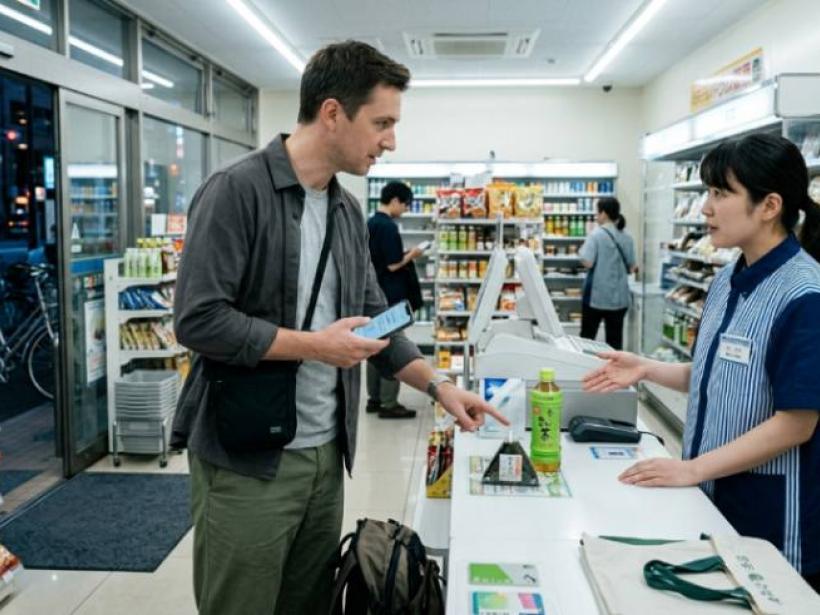
Konbini (convenience stores) basically run on a script. Ask for a bag or not, heat this up or not, eating here or taking it with you. You don't need fluent Japanese for any of that — you need to recognize the question and nod or say hai. That's it. That single habit is more useful than most phrase lists combined.
- Fukuro wa go-riyou desu ka? — need a bag?
- Atatamemasu ka? — want it heated?
- Ten de oaidesu ka? — here, or to go?
Guidebooks tend to assume English is everywhere. It isn't. Big train stations, chains, hotel front desks — sure. Small izakayas, guesthouses, a taxi driver outside Tokyo — not really. That gap is the thing that decides which phrases you actually need on a given day, not some general checklist you memorized on the plane. It's the same reason the common Spanish phrases for travelers that work in Madrid can fall flat in a small town in Andalusia.
A friend of mine got turned away from three places in Kyoto during dinner rush last year. Not a language problem exactly — she just hadn't learned ippatsu de onegaishimasu, which is what solo diners say to signal they don't need a full table. One specific phrase, solved a specific problem no phrasebook mentions.
Honestly, the best trick isn't a phrase at all. Point at your phone, say kore (this), then onegaishimasu (please). People will repeat it back to confirm, you nod, done. Two words handle more real situations than a whole page of vocabulary. If you're island-hopping afterward, the must-know Portuguese phrases for travellers rely on the same point-and-confirm trick.
Learn the situations. The words follow on their own.
FAQ
What are some useful Japanese travel phrases? Sumimasen (excuse me/sorry), onegaishimasu (please), arigatou gozaimasu (thank you), and ikura desu ka (how much is it). These four cover most daily situations.
What is the best Japanese phrasebook for travel? There's no single "best" one. Look for a phrasebook organized by situation — trains, konbini, restaurants — rather than a plain alphabetical vocabulary list. Situational phrasebooks stick better in the moment.
What are some useful Japanese shopping phrases? Ikura desu ka? (how much is it?), Kore kudasai (this one, please), and Kaado wa tsukaemasu ka? (can I pay by card?) cover most shopping situations.
How do I say "I'm sorry I don't speak Japanese"? "Sumimasen, nihongo ga hanasemasen." It signals politely that you need patience or English.
How do you say "have a good trip" in Japan? "Ki o tsukete" — literally "take care" — is the common way to wish someone well before they travel.
What is the Japanese phrase for "safe travels"? "Go-anzen ni" or the more casual "ki o tsukete" both work for safe travels.
How do you wish a good trip in Japanese? "Yoi tabi o" (have a good trip) or "itte rasshai" (go and come back safely) — the second is used specifically when someone is leaving.