
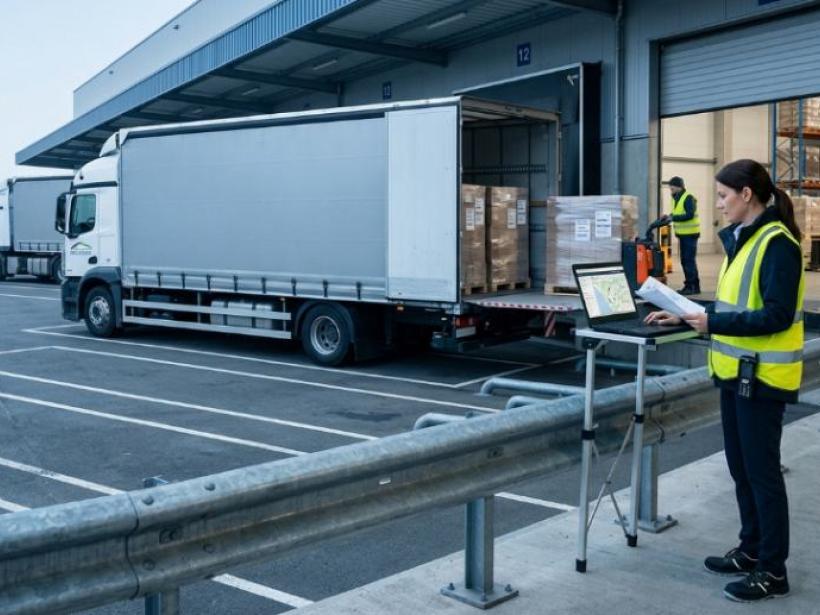

The true cost of transport becomes clear not from a price list, but during the job itself — when customs charges appear, a truck is held at the border, or a consignment stuck in transit suddenly needs a warehouse. Below are six things a professional logistics provider takes on, lifting that load off a business and its team.
1. Route planning based on real road conditions
An experienced logistics company works not only from the map, but from the actual load at border crossings in a given season and time of day. This helps avoid corridors where trucks routinely wait for hours and shortens total transit time without paying a premium for urgency.
2. Documentation and customs handling
The commercial invoice, declaration and certificates — any one of these can hold up a consignment if it contains a single error, and a border check adds another day or two to the schedule. When a specialist handles the paperwork, applies the correct Incoterms and manages customs clearance, the business owner receives a finished result rather than a list of objections from the customs officer.
3. A transport company that consolidates small shipments into one run
Small businesses rarely need a full truck, so groupage lets them pay only for the space they actually use. A transport company with a developed network of routes builds these consolidated (LTL) runs on a regular basis, not on demand for a single client.
4. Temporary storage without renting your own warehouse
A manufacturer often needs to build up a batch before dispatch or, conversely, split a large delivery into several smaller shipments for different stores. The carrier's warehousing services — including bonded warehouse space — cover this need without extra spending on rent and staff.
5. Insurance instead of relying on luck
Damaged packaging, a delay caused by a road accident, or even theft — all of this is rare but expensive when the cargo is uninsured and the owner finds out only after the fact. A transport and logistics company usually includes cargo insurance in the base rate rather than selling it separately once an incident has already happened.
6. Shipment visibility at every stage
When a client can see the status of the cargo online, they plan unloading or production in advance instead of waiting for a call with uncertain news about a delay. For a business with a tight supply schedule, real-time track and trace often matters more than the transport price itself.
When it makes sense to outsource logistics
A logistics company justifies its cost once delivery volumes grow and it becomes hard to keep documents, routes and deadlines under control in-house at the same time — the point at which it makes sense to outsource to a third-party logistics (3PL) provider. An international logistics provider is especially valuable when shipments cross more than one market and several countries have to be coordinated at once. EA Logistic takes on these functions — from route calculation to customs support — and has its own branches in Poland and China, which simplifies operations on those corridors. Leave a request and receive a calculation tailored to your specific cargo and route.