


The Korean phrases a traveler needs most are Annyeonghaseyo (hello), Gamsahamnida (thank you), Juseyo (please give me) and Eodiyeyo? (where is it?). You do not need to read Hangul to use them; the romanization below is simple, and all phrases are in the polite standard form, which is the safest choice for visitors.
Greetings and Politeness
| Situation | Phrase | Pronunciation hint | Notes |
|---|---|---|---|
| Hello | Annyeonghaseyo | an-nyeong-ha-se-yo | Works at any time of day |
| Thank you | Gamsahamnida | gam-sa-ham-ni-da | Pair with a small nod |
| Sorry | Mianhamnida | mi-an-ham-ni-da | For apologies |
| Excuse me | Sillyehamnida | sil-lye-ham-ni-da | Polite way to pass by or start a question |
| Goodbye to someone leaving | Annyeonghi gaseyo | an-nyeong-hi ga-se-yo | You are staying, they are going |
| Goodbye when you leave | Annyeonghi gyeseyo | an-nyeong-hi gye-se-yo | They are staying, you are going |
| Yes, no | Ne / Aniyo | neh / a-ni-yo | Ne can mean I hear you, not always agreement |
Sound Tips and Signs
Korean has no strong stress, so say each syllable evenly and keep the pitch steady. The vowel combination eo sounds roughly between uh and aw, and eu is like a flat oo said without rounding your lips. You will not get every sound right, and that is fine. These signs are also worth recognizing: 화장실 (hwajangsil) is the restroom, 입구 (ipgu) is the entrance and 출구 (chulgu) is the exit, the last one useful on subway maps.
Eating Out
| Situation | Phrase | Pronunciation hint | Notes |
|---|---|---|---|
| Calling staff | Yeogiyo | yeo-gi-yo | Normal and not rude; some tables have a call button |
| Ordering | Igeo juseyo | i-geo ju-se-yo | Point at the menu or a neighboring dish |
| Water | Mul juseyo | mul ju-se-yo | Water is often free and self-serve |
| Compliment | Masisseoyo | ma-sis-seo-yo | It is delicious |
| Paying | Gyesan hae juseyo | gye-san hae ju-se-yo | Many places expect you to pay at the counter |
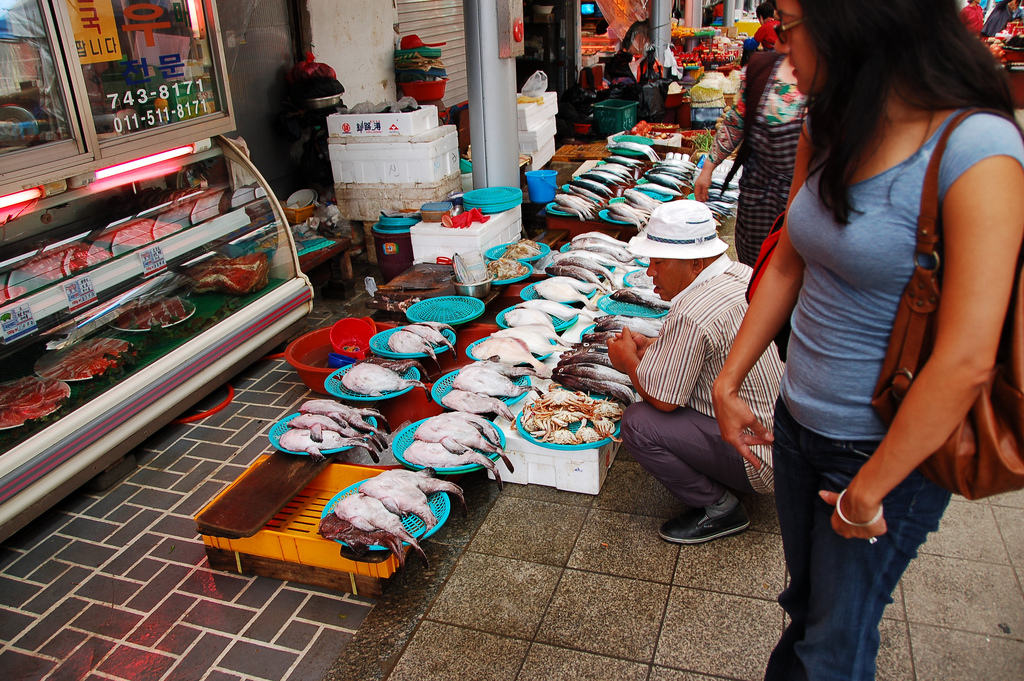

Many dishes are made for two or more people, so say how many you are. If you are exploring the capital, our day in Seoul shows how far these basics take you.
Getting Around and Shopping
| Situation | Phrase | Pronunciation hint | Notes |
|---|---|---|---|
| Asking where | Hwajangsil eodiyeyo? | hwa-jang-sil eo-di-yeo-yo | Put any place name before eodiyeyo |
| Subway | Jihacheol-yeok | ji-ha-cheol-yeok | Station signs also show English |
| Taxi | Yeogi-seo naeryeo juseyo | yeo-gi-seo nae-ryeo ju-se-yo | Please let me out here |
| Price | Eolmayeyo? | eol-ma-yeo-yo | Point at the item |
| Card | Kadeu dwaeyo? | ka-deu dwae-yo | Can I pay by card? |
| Not understanding | Jal moreugesseoyo | jal mo-reu-ges-seo-yo | I do not know or understand |
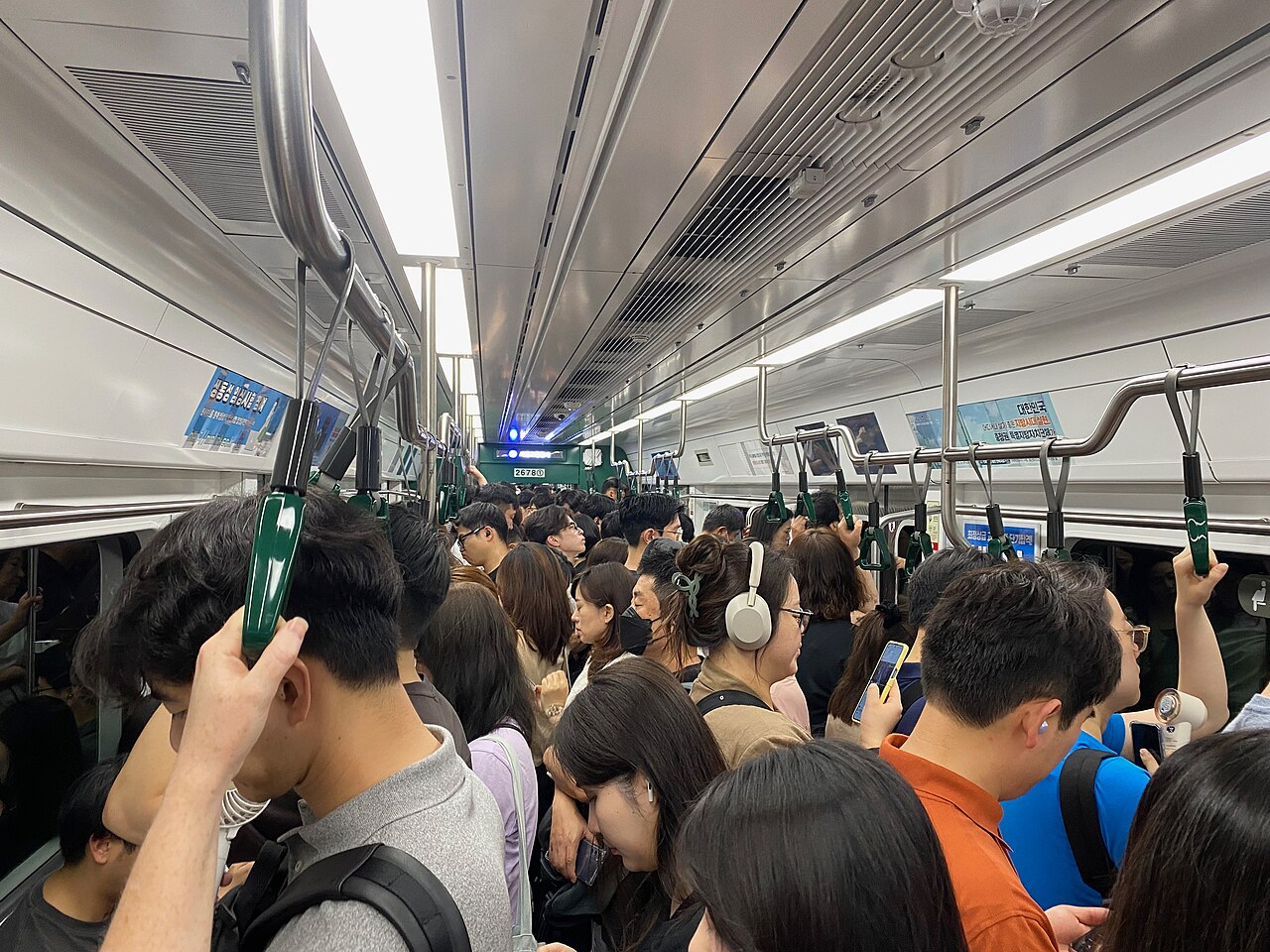

Showing your destination in Korean on a phone is the easiest approach in a taxi. If you need data for that, read our notes on staying connected abroad before you land.
Etiquette Worth Knowing
- Give and receive items with both hands, or with one hand supported by the other, especially with older people.
- Take your shoes off when entering a home and at many restaurants with floor seating.
- Do not stand chopsticks upright in a bowl of rice.
- Tipping is generally not expected.
- At a shared meal, wait for the oldest person to start eating, and pour drinks for others rather than only for yourself.
- Keep your voice down on public transport, where phone calls and loud talk are usually avoided.
- Smile and nod if you are unsure. A friendly attempt in Korean is appreciated even when the grammar is imperfect.
Mistakes Travelers Actually Make
- Using casual speech. Short forms like Annyeong are for friends; stick to Annyeonghaseyo.
- Reading Ne as a firm yes. It often only means I am listening.
- Mixing up the two goodbyes. Choose by who is leaving.
- Whispering. A clear, friendly voice is fine in shops.
Frequently Asked Questions
Do I need to learn Hangul to travel in Korea?
No. Station names and many signs appear in English too, and the romanization here is enough for short trips. Learning the alphabet is quick and helps with menus, but it is optional.
Is tipping expected in Korea?
Generally no. Tipping is not part of the usual custom in restaurants and taxis.
How do I say please in Korean?
There is no single word. You add juseyo after what you want, as in Mul juseyo for water please.
Practice five or six of these aloud before you fly and add more as real situations call for them. If you are comparing languages for other trips, our guide to common Spanish phrases takes the same practical view.