
What do the official travel advisories say about the Bahamas right now?
The Bahamas remains open to tourism, but several governments have raised their caution levels because of violent crime in Nassau and Freeport. As of early 2025, the US State Department keeps the Bahamas at Level 2 (Exercise Increased Caution) and specifically warns against visiting the Over the Hill area in Nassau and parts of Freeport on Grand Bahama Island. The advisory, updated in January 2025, highlights armed robberies, burglaries and sexual assaults as the most common serious incidents involving visitors.
The UK Foreign Office (FCDO) does not advise against travel but warns that most crime occurs on New Providence and Grand Bahama islands. Its guidance, reviewed in December 2024, notes an increase in homicides that have occasionally affected bystanders in tourist areas. The Canadian government takes a similar stance, advising travellers to exercise a high degree of caution and to avoid walking alone at night, particularly away from the main tourist zones.
All three advisories point to the same key risks:
- Armed robberies and muggings in downtown Nassau after dark and in less policed residential streets.
- Sexual assaults reported at beaches, on party boats and in poorly lit areas near hotels.
- Burglaries and thefts from short-term rental properties, even when guests are present.
- Jet ski and watercraft rental scams where operators demand inflated cash payments before allowing tourists to leave.
- A rise in gang-related violence on New Providence that occasionally spills into commercial zones.
Which parts of the Bahamas are most affected by crime?
Crime affecting visitors is concentrated in a handful of urban neighbourhoods in Nassau, on New Providence Island, and to a lesser extent in Freeport, on Grand Bahama. The US State Department advisory, last updated in January 2024, specifically flags the Over-the-Hill area south of Shirley Street in Nassau, where gang-related violence occurs, and advises travellers to avoid this zone after dark. The UK Foreign Office warns against walking alone in Nassau away from the main tourist zones, particularly at night.
Freeport’s crime risk is lower than Nassau’s but still present in certain residential pockets away from the cruise port and resort strip. Lucaya and the immediate waterfront areas are well policed and see few serious incidents involving tourists. The Out Islands (the Family Islands) such as Eleuthera, the Exumas, Cat Island and Long Island report very little violent crime, and official advisories do not single out any specific locations there as high risk. Most independent travellers on the Out Islands find safety concerns are limited to petty theft from unlocked rental cars and unattended beach bags.
What types of crime do tourists actually encounter?
The most common crimes reported by visitors are opportunistic theft and property crime, not violent confrontations. Snatch-and-grab incidents happen on busy beaches and along Bay Street in Nassau when a phone or bag is left unattended on a chair or table. The US State Department notes that theft from hotel rooms and rental vehicles also occurs, even inside gated resorts.
Credit card fraud and ATM skimming are the other frequent problems. Travellers report unauthorised charges after using cards at smaller, independent businesses or standalone cash machines away from bank lobbies. Violent incidents are rare but do happen, usually late at night in areas with little pedestrian traffic and poor lighting. The UK FCDO warns that armed robberies occasionally target tourists who are walking alone after dark or carrying visible valuables.
- Beach bag snatching when a phone or wallet is left on a towel while you swim.
- Hotel room theft by someone who watches you leave and enters through an unbolted door or balcony.
- Rental car break-ins at isolated beach car parks where bags are visible on the back seat.
- ATM card cloning at standalone machines, especially those without a chip reader or security camera.
- Late-night muggings on quiet streets in Nassau, sometimes involving a weapon.
- Drink spiking in bars and clubs, reported occasionally in the Nassau downtown area.
How safe are the Out Islands compared to Nassau?
The Family Islands (the Out Islands) are consistently safer for tourists than New Providence, where Nassau sits. The US State Department travel advisory, updated in 2024, notes that the vast majority of crime occurs on New Providence and Grand Bahama islands. The Out Islands see very few incidents involving visitors.
Destinations like the Exumas, Eleuthera, the Abacos, Cat Island and Long Island have small, close-knit communities where violent crime against tourists is extremely rare. You can walk through the settlements on Harbour Island or Great Exuma after dark with far fewer concerns than in downtown Nassau. Property crime is also low, though you should still lock rental villas and not leave valuables on empty beaches.
The practical difference comes down to scale and isolation. Nassau has a population of over 270,000 and the pressures of a busy urban centre. The Out Islands are sparsely populated, with no large towns, and a visitor's presence is noticed. A solo traveller or a couple can move freely without the street-level risks common in Nassau's high-traffic areas.
What precautions should I take while staying in the Bahamas?
Most visits to the Bahamas pass without incident, but a few simple habits sharply reduce your risk. Keep your passport and most cash in the hotel safe, and carry only a copy of your ID and the money you need for the day. Leave expensive jewellery and watches at home; a visible Rolex or diamond ring makes you a target.
After dark, stick to well-lit main streets and avoid the Over-the-Hill area of Nassau and empty beaches. Use only licensed taxis, which display a yellow number plate and a government-issued taxi decal, or arrange rides through your hotel. If you rent a car, keep doors locked and windows up, and never leave bags on the seat.
Watch your drink in bars and nightclubs, and do not accept drinks from strangers. If confronted by a robber, hand over what they ask for without resistance; victims who comply are rarely harmed. Keep your phone charged and save the local emergency number, 919, before you leave your accommodation each day.
- Lock passports and most cash in the hotel safe and carry only a day's spending money.
- Stick to main streets after dark and avoid the Over-the-Hill area of Nassau and secluded beaches.
- Use only licensed taxis with yellow plates and a taxi decal, or book through your hotel.
- Never leave a drink unattended and do not accept drinks from people you have just met.
- Comply calmly if confronted; hand over valuables without arguing or resisting.
- Save the emergency number 919 in your phone and keep the battery charged.
Is it safe to swim, snorkel and take boat trips in the Bahamas?
Swimming and snorkelling are generally safe on patrolled beaches and organised excursions, but rip currents on Atlantic-facing shores catch swimmers off guard every year. Before entering the water, ask your hotel or a local lifeguard about conditions that day. The flagged area system is the same as in the UK and US: swim between the red and yellow flags, and stay out of the water when a red flag flies.
Boat trips and jet ski hires need a quick check of the operator. Book through your hotel or a licensed outfitter with a physical office, not a beach vendor who approaches you with a laminated menu. Jet ski scams follow a pattern: you hire the machine, a spotter onshore photographs minor damage you did not cause, and the operator demands cash before you leave the island. A reputable outfit will walk you around the machine before you start and note existing scratches on a form you both sign.
If you are renting a boat or joining a snorkel excursion, glance at the safety kit before you push off. A licensed Bahamian boat must carry life jackets for every passenger, a working VHF radio and flares. Weather moves fast in the islands from June to November, and a clear morning can turn into a squall by midday. A responsible skipper will cancel or shorten a trip when a small craft advisory is in effect, so do not pressure them to go out if they say conditions are marginal.
Are there any health or natural risks I should know about?
Hurricane season in the Atlantic runs from 1 June to 30 November, with the highest storm activity usually between mid-August and late October. The Bahamas lies directly in the hurricane belt, so a storm can disrupt flights, ferry services and hotel operations, sometimes for several days. Travellers visiting during those months should monitor updates from the Bahamas Department of Meteorology and confirm that their accommodation has a written storm policy before booking.
Mosquito-borne illnesses are present year-round on most islands. Local health authorities occasionally report cases of dengue fever, and the US Centers for Disease Control and Prevention advise using an EPA-registered insect repellent, wearing long sleeves at dawn and dusk, and sleeping under air conditioning or a bed net where possible. Tap water is generally safe in Nassau and Freeport, but on some Out Islands it comes from reverse-osmosis systems or rainwater cisterns; if you have a sensitive stomach, stick to bottled or boiled water.
Medical facilities vary sharply by location. Nassau has private clinics and the Princess Margaret Hospital, which can handle most emergencies, while the Family Islands often have only small public clinics with limited hours and no specialist care. A serious injury or illness on a remote cay usually requires an air ambulance to Nassau or to Florida, and those transfers are expensive. Comprehensive travel insurance with medical evacuation cover is essential for any trip outside New Providence; check that your policy explicitly includes the Bahamas and lists evacuation by air, not just ground ambulance.
Frequently asked questions
Is it safe to walk around Nassau during the day?
Yes, walking in the main tourist areas of Nassau such as downtown Bay Street and Paradise Island is generally safe during daylight hours. Stick to well-populated streets, avoid empty beaches and side alleys, and take a licensed taxi if you are unsure about a neighbourhood.
Which islands in the Bahamas are the safest?
The Out Islands, also called the Family Islands, have significantly lower crime rates than New Providence and Grand Bahama. Islands like Eleuthera, the Exumas, Cat Island and Long Island see very few incidents involving tourists, though basic precautions still apply.
Do I need to worry about hurricanes in the Bahamas?
The official Atlantic hurricane season runs from June to November, with the peak between August and October. The Bahamas lies in a hurricane-prone corridor, so you should monitor forecasts, book accommodation with flexible cancellation policies, and have travel insurance that covers weather-related disruption.
Is tap water safe to drink in the Bahamas?
Tap water in Nassau and Freeport is generally considered safe to drink, though many visitors prefer bottled water because the taste can be slightly saline. On the Out Islands, where water comes from wells or reverse osmosis systems, bottled water is the safer choice.
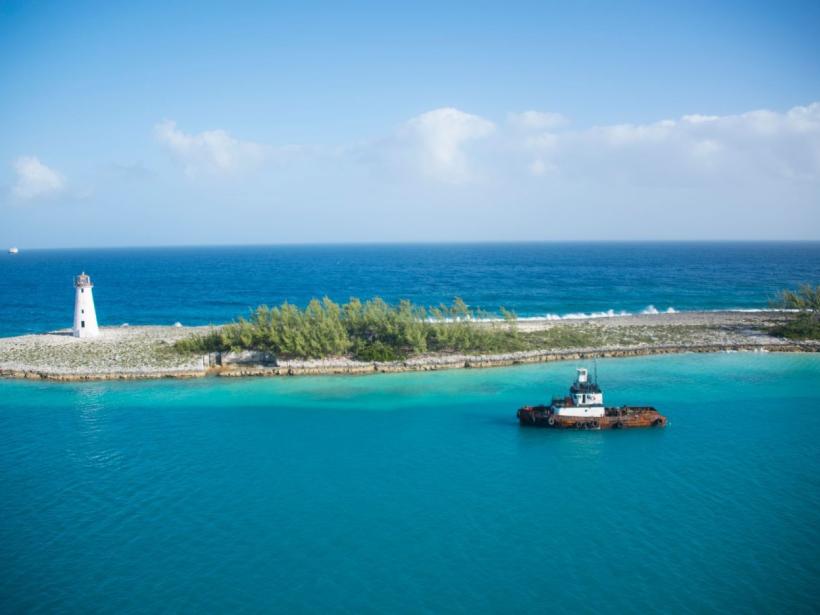
Photo: Diego F. Parra, Pexels (Pexels License)