
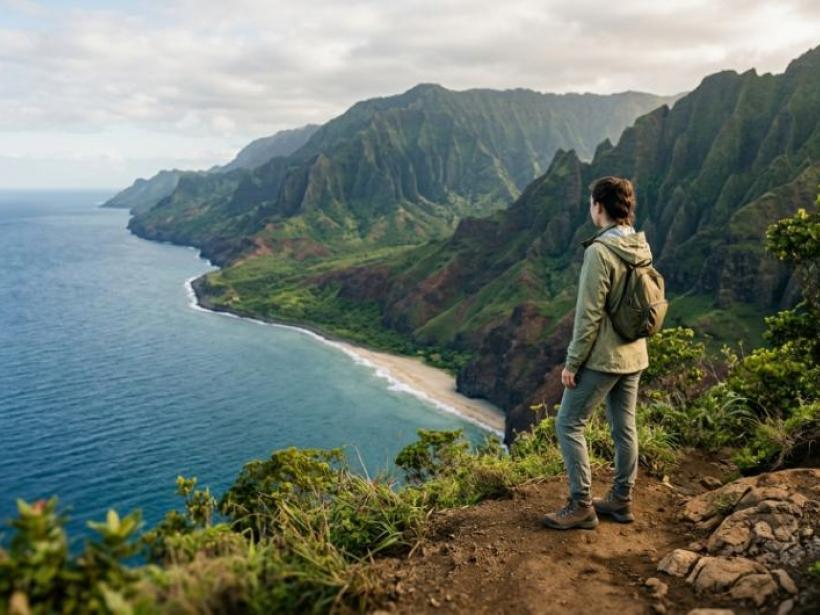

Short answer: yes. Kauai is still one of the safer places you can vacation in the United States. Hawaii regularly ranks among the safest states for violent crime, and Kauai has no active volcano and no widespread pesticide danger to visitors. The things actually worth planning around are natural: ocean currents, flash floods, and weather that can turn a hike or a swim risky fast. If you're weighing Kauai against other destinations that get the same safety questions, see how it compares to Belize and Croatia.
Below is a straight, fact-checked look at the specific worries people search for — the volcano, the pesticides, and what "safe" actually means on this island right now.
Is Kauai Generally a Safe Place to Visit?
Yes. Hawaii is consistently ranked as one of the safest U.S. states for violent crime, and Kauai — the least developed and least crowded of the main islands — sees very little of it. Petty theft (unattended bags, rental cars broken into at trailheads) is the most common issue tourists actually run into, not anything more serious.
The U.S. State Department doesn't issue Hawaii-specific advisories beyond the general domestic travel guidance it gives for any U.S. state. There's no elevated warning tied to Kauai itself.
Does Kauai Have an Active Volcano?
No — and this is worth being clear about, because the question keeps coming up. Kauai is the oldest of the main Hawaiian islands, and its volcano has been extinct for millions of years. There's no eruption risk, no lava flow risk, nothing comparable to what happens on the Big Island.
The volcano people are actually thinking of is Kilauea, on the Big Island, over 300 miles away. When Kilauea erupts, it can occasionally send vog (volcanic haze) drifting to other islands, including Kauai, which shows up as hazy skies and can affect air quality on bad days. That's a nuisance, not a hazard specific to Kauai, and it has nothing to do with Kauai's own geology.
What About the Pesticide Concerns on Kauai?
This one has real history behind it, so it's worth explaining rather than dismissing. For years, large agricultural companies — Syngenta, DuPont, Dow AgroSciences, and BASF — ran GMO seed-testing operations on Kauai's west side, near Waimea and Kekaha. Residents near those fields, including a school, reported health complaints linked to pesticide drift, and the issue became a serious local controversy through the 2010s.
Hawaii responded with legislation. A state law passed in 2018 requires buffer zones — restricted-use pesticides can't be applied within 100 feet of a school during school hours — along with mandatory disclosure of what's being sprayed and where. That doesn't erase the history, but it did change the regulatory picture.
For a visitor, the practical point is geography: these agricultural fields sit on the west side of the island, away from where most tourists actually stay or spend time.
Is Princeville Affected by Pesticide Spraying?
No. Princeville is on the North Shore, roughly 40 miles from the west-side agricultural fields near Waimea. The two areas don't overlap, and there's no meaningful pesticide exposure risk for people staying in Princeville, Hanalei, or anywhere else on the North Shore.
What Should You Actually Watch Out For on Kauai?
The real risks on Kauai are environmental, not man-made:
- Ocean currents. Kauai's beaches can have strong rip currents, especially on the North Shore in winter. Check posted flags and ask lifeguards before swimming anywhere unfamiliar — the same caution that applies at Florida's beaches or any coastline with changing conditions.
- Flash floods. Heavy rain (a "Kona low" weather system) can flood streams and low-lying roads with little warning. Don't cross flooded roads.
- Hiking hazards. Trails like Kalalau on the Na Pali Coast are stunning but exposed, with cliff edges and unstable footing after rain. Stick to your fitness level and check trail conditions first.
- Hurricane season. Hawaii's hurricane season runs June through November, so if you're traveling in that window, it's worth glancing at the forecast a few days out.
Is It Still Safe to Travel to Kauai?
Yes. Nothing about the island's fundamentals — crime rate, volcanic activity, or the pesticide situation — has shifted into "unsafe" territory. Conditions that do change day to day, like ocean advisories after heavy rain, are normal and temporary. Before you go, it's worth a quick check of the Hawaii Department of Health's Clean Water Branch for any active beach advisories and the National Weather Service for storm activity, just so you're not caught off guard.
Bottom Line
Kauai is safe to visit. No active volcano, no island-wide pesticide danger, and a crime rate lower than most places you'd compare it to. Plan around the water and the weather, not around myths.