
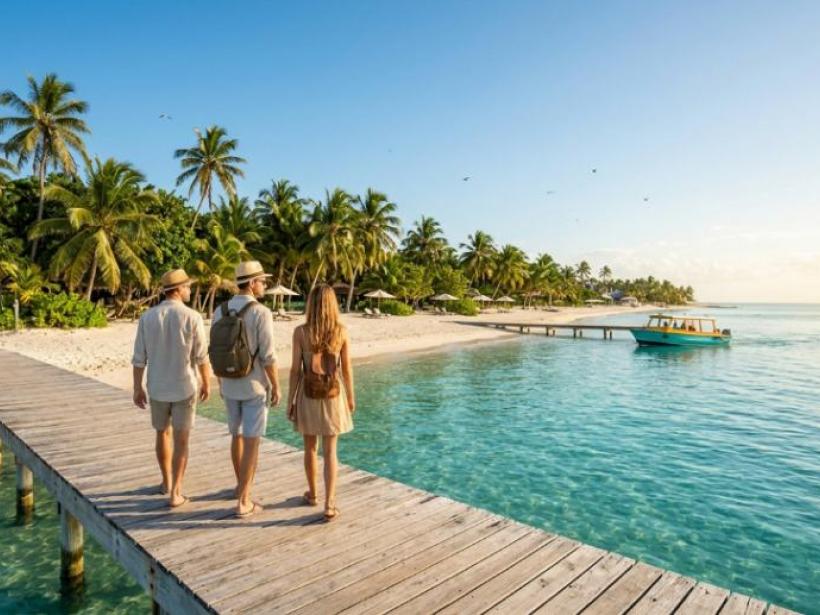

Belize is safe to visit in 2026 for most travelers. The State Department's current advisory system puts it in the second of four risk tiers, meaning the same caution level assigned to France and the United Kingdom, a rating that hasn't shifted since it was last reviewed in March 2026. One neighborhood carries a harsher label: the southern half of Belize City, which sits nowhere near the beaches, cayes, or jungle lodges most visitors actually book. Head to Placencia, Hopkins, San Ignacio, or any of the islands, and the risk profile looks close to what you'd accept traveling almost anywhere. If you're comparing it against other under-the-radar options, our list of top Caribbean destinations for couples covers a few spots with a similar quiet-escape feel.
What the current advisory actually says
Nothing about the current rating is new. The country as a whole holds steady at that second-tier caution level, but a stricter, near-top warning applies to one specific stretch of Belize City: the residential blocks south of the Haulover Creek canal, roughly down to Fabers Road. That distinction exists because of gang violence rooted in that particular pocket of the city. The islands and the beach towns don't fall under it, and the advisory doesn't pretend they do.
Belize's government also imposed a temporary emergency order in early May, running about a month and limited to Belize City and nearby parts of the district, aimed squarely at gang activity in those neighborhoods. It ran its course and lifted; the UK's FCDO subsequently dropped its own emergency notice for Belize once that happened, treating it as resolved rather than ongoing. Worth noting: none of it touched daily operations elsewhere. Flights landed on schedule, water taxis kept their routes, hotels stayed open, tours ran. So the question of whether it's fine to go right now has a straightforward answer, yes, and the order that briefly made this a bigger story than usual isn't in effect anymore. Storm season is worth building into your calendar separately from crime concerns; see where to travel during hurricane season for how that timing plays out across the region.
For American travelers specifically, Belize is about as straightforward as this region gets. English is the official language, which cuts out a layer of friction you'd deal with elsewhere in Central America. The precautions that matter are the ordinary ones: take licensed taxis, don't leave your phone sitting on a beach towel, and skip the after-dark solo walks, even on quiet islands like Caye Caulker.
How safe is it, really
Last year's national murder count sat at 91, barely moved from the year before. Just over half of those, roughly 53%, were tied to the Belize District, and within that district it was overwhelmingly a Belize City problem, not something showing up in the towns where tourists actually spend their nights. Violence directed at visitors is uncommon. What travelers deal with instead is smaller and more familiar: a stolen wallet, a snatched bag, a skimmed card at an ATM. The distinction matters because a national homicide number can look alarming while telling you almost nothing about the risk to someone spending a week on Ambergris Caye, since that number is driven by one localized conflict rather than spread evenly across the country. We've run the same kind of area-by-area breakdown for Cancún, Trinidad and Tobago, and Turkey, and the pattern tends to repeat: one flagged zone, and a lot of calm territory around it.
A quick sense of how risk breaks down by area:
|
Destination |
Typical risk level |
Why |
|
Ambergris Caye / San Pedro |
Low |
Tourism-dependent, visible police presence |
|
Caye Caulker |
Low |
Small and walkable, low violent crime |
|
Placencia |
Low |
Consistently low crime rates |
|
San Ignacio (Cayo) |
Low to moderate |
Fine in daylight, avoid empty streets after dark |
|
Southside Belize City |
High |
Gang-related violence, not part of the tourist route |
Is it safe to travel to Belize City
It comes down to which part of the city you mean. For most visitors, Belize City is a stop on the way somewhere else, a spot near the airport or the water-taxi dock, not a destination in itself. The stricter warning applies to the area south of Haulover Creek specifically. Passing through means heading straight to your connection rather than lingering to look around. North of the creek, closer to the airport and the cruise terminal, is a noticeably calmer stretch of the same city.
One family flying into Philip S. W. Goldson International Airport in June 2026 booked a same-day transfer straight to Ambergris Caye, never setting foot in Belize City proper. That's the pattern most visitors follow, and it's why the city's crime numbers rarely translate into anything tourists actually experience. It's the same low-stress routing we point to in our family vacations without drama guide: land, transfer, settle in, skip the parts of the city that aren't part of the trip anyway.
Practical precautions worth taking
Book taxis through your hotel rather than flagging one down on the street. Keep passports and cash in a room safe instead of a daypack. Don't walk alone after dark, even somewhere as calm as Placencia. It's also worth saving Belize's Tourism Police number, 0-800-922-8932, before you land, and doing a quick check of the official State Department page 48 hours before departure, since advisories do shift.
Bottom line
A Level 2 rating puts Belize alongside France and Italy, not alongside places people genuinely avoid. The violence that drives the country's crime statistics is boxed into one part of Belize City that has nothing to do with where tourists actually go. Daylight walking, licensed transport, and not flashing valuables around cover almost all of the real risk you'd be taking on. It's the same short list we'd give anyone heading to Punta Cana or another beach-heavy destination this year.