
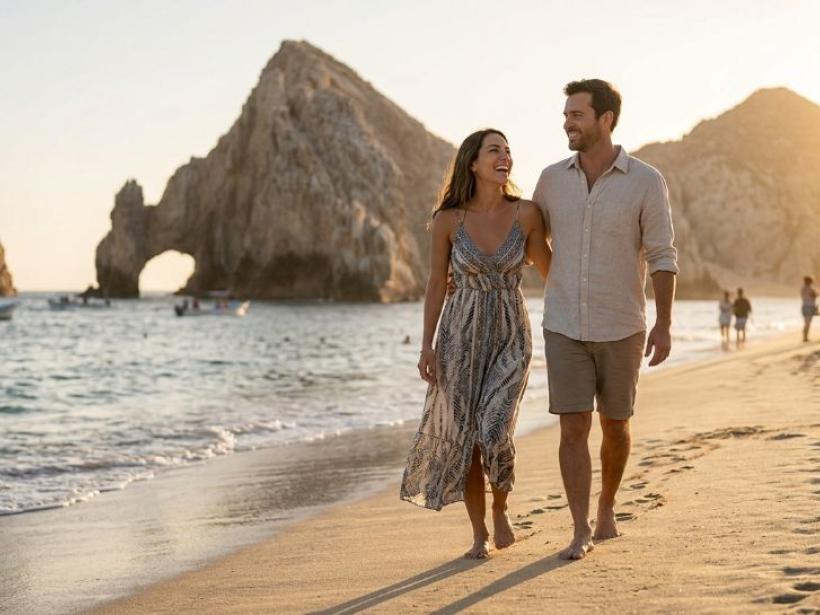

Cabo San Lucas is safe for nearly everyone who visits. The U.S. State Department currently places Baja California Sur — the state covering Cabo San Lucas, San José del Cabo, and La Paz — at Level 2: Exercise Increased Caution, the same tier as Quintana Roo, where Cancun sits, and Mexico City. Roughly 3.93 million people visited Los Cabos in 2024, about 1.65 million of them American, per the Los Cabos Tourism Observatory — so this is a place people show up to in serious numbers, year after year.
Is Baja California Sur the Same as Baja California?
No, and confusing the two is where most of the panic comes from. Baja California — without "Sur" — is the northern border state that includes Tijuana and Mexicali, and it sits at Level 3, Reconsider Travel. Baja California Sur, down at the peninsula's tip, is its own state and its own Level 2 rating. Cabo belongs to the second one. Anytime a headline says "Baja California" without specifying which, check before you assume it touches your trip.
Is Cabo Actually Affected by Mexico's Security Headlines?
Not by the two stories driving most of the searches right now. The Level 2 rating itself is a caution flag, not a stay-away flag — the State Department attributes most crime in Baja California Sur to disputes between organized-crime groups rather than attacks on visitors, and U.S. government staff face no travel restrictions in Cabo San Lucas, San José del Cabo, or La Paz.
Did the February 2026 Cartel Violence Reach Cabo?
No. Mexican forces killed Jalisco New Generation Cartel leader Nemesio "El Mencho" Oseguera Cervantes in Tapalpa, Jalisco that February, and the retaliation that followed — burning vehicles, roadblocks, gunfights with security forces — spread across roughly 20 states, most heavily in Jalisco and Michoacán. Cabo sits more than 700 miles away, on a different peninsula entirely, and Baja California Sur's advisory didn't move because of it. So when that story shows up next to your trip planning, the useful question isn't "is Mexico safe" — it's "does this particular state border my destination," and here the answer is no.
Beyond that, the usual travel habits apply: stay alert in crowded areas, don't wear obvious wealth, and book transportation through your hotel rather than flagging something down on the street.
Where Should You Stay, and Is the Water Safe?
Security concentrates around the Marina, downtown, the corridor connecting Cabo San Lucas to San José del Cabo, and the big hotel zones — which happens to be where most travelers spend basically their whole trip anyway. Wander onto quieter back streets after dark and you're taking the same modest risk you'd take doing that in any unfamiliar city.
The ocean is where the real caution belongs. Sea of Cortez beaches like Medano stay fairly calm. The Pacific side doesn't — the stretch of Playa del Amor facing the Pacific earned the nickname "Divorce Beach" for its surf and undertow, and getting in that water is a bad idea regardless of how it looks from the sand. Ask before you swim anywhere you don't already know.
What Should You Actually Watch Out For?
- ATM skimming. Withdraw cash inside a bank or hotel lobby, not from a standalone machine on a street corner.
- Timeshare pitches. Aggressive sales reps near the marina will offer free tours, tickets, or excursions to get you into a presentation — a nuisance more than a danger, but worth knowing to expect.
- Divorce Beach and other Pacific-facing sand. Photogenic, not swimmable — treat any Pacific-side beach as a lookout point rather than a swimming spot unless it's clearly marked otherwise.
- Passport expiration. More trips get derailed by an expired passport than by anything on this list — check the date months out, not days out.
Set against the headlines, Cabo San Lucas holds up: still one of Mexico's more dependably safe tourist spots, and nothing from 2026's bigger security stories has touched that. Stay in the corridor, keep out of the Pacific surf, and bring the same street awareness you'd bring to Mexico City or any resort town.