
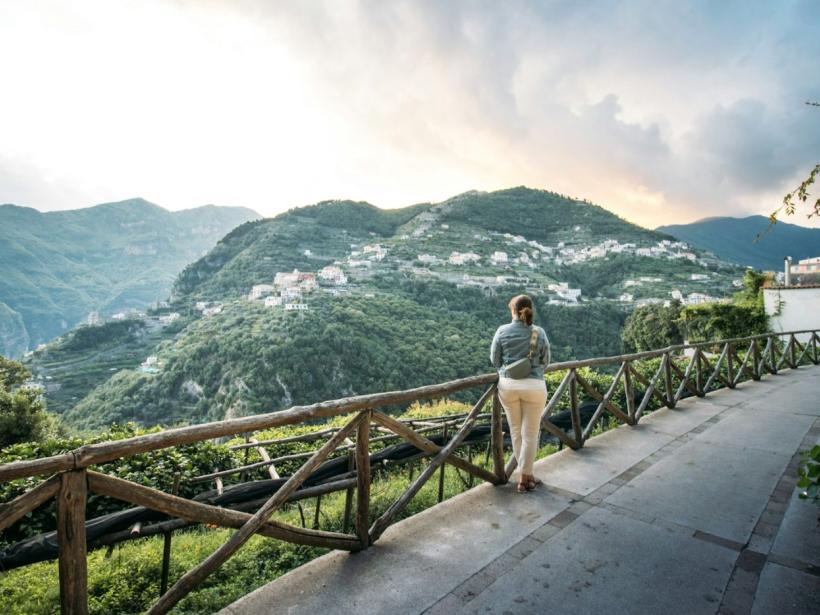
What makes a place romantic for couples in Italy
Romance in Italy rarely comes from a single landmark. It builds through small, repeated moments: a long dinner under string lights, a street quiet enough to hear your own footsteps, a view that asks for silence rather than a selfie. The towns that draw couples back share a few practical traits: you can slip into a slower rhythm without fighting crowds or rigid schedules.
A walkable historic center counts for more than any hotel rating. When you can wander from a morning espresso to a late-night gelato without once checking a bus timetable, the day unfolds at its own pace. Add a waterfront promenade, a hilltop piazza or a garden with shaded benches, and the setting does the rest.
- Car-free or traffic-calmed old towns where you walk everywhere without thinking about it
- Restaurants and wine bars that stay open late, with tables spilling onto quiet squares
- Scenic viewpoints reachable on foot at dusk, when day-trippers have already left
- Small, family-run hotels and guesthouses that give you a reason to linger in the neighborhood
- A balance of culture and downtime, so you never feel you are ticking off a checklist
- Local rhythms still going strong: morning markets, evening passeggiata, genuine hospitality
The passeggiata, the Italian evening stroll, is the simplest test of a place. When residents of all ages stroll, stop for a spritz and fill the piazzas with low chatter, you feel part of something lived-in rather than staged. Towns that empty after sunset leave couples with little beyond a hotel room. The best spots let you borrow that local rhythm for a few days.
Venice without the day-trip crowds

Venice transforms after 5 p.m., once the cruise ships and tour buses have gone. The narrow alleys empty out, the canals grow still, and the evening light turns the water a soft gold. This is when the city becomes intimate and unhurried. You can walk from the Rialto to St. Mark's without weaving through a wall of selfie sticks, and the only sound might be church bells echoing across the rooftops.
Skip the Grand Canal after dark and wander the back canals of Cannaregio instead. The Rio della Misericordia and the quiet fondamenta along the Rio di San Felice have lantern-lit reflections that look like a painting. Stop into a bacaro for cicchetti and a glass of wine. Locals favor Cantina Aziende Agricole on Rio Terà Farsetti for its tiny counter and honest small plates, or Vino Vero on the Fondamenta Misericordia for natural wines and fried seafood bites. Dorsoduro offers a similar calm along the Zattere promenade, where you can sit on a bench and watch the Giudecca Canal as the vaporettos glide past.
For a place to stay, book in these two sestieri rather than San Marco. In Dorsoduro, small guesthouses near Campo Santa Margherita put you steps from evening cafes where students and residents gather. In Cannaregio, hotels along the Strada Nova give you easy access to the train station and the quieter northern canals. A room with a canal view costs less here than near the Rialto, and you wake to the city's real rhythm, not the crowds.
Verona beyond Juliet's balcony
Juliet's House draws the queues, but Verona holds much quieter corners that suit a couple far better. Start at the Arena di Verona, the first-century Roman amphitheater in Piazza Bra. It seats 22,000 people and still hosts summer opera performances under the stars. Book tickets for a Verdi or Puccini production months ahead, or simply climb the stone steps during a daytime visit and look out over the pink marble arcades.
A fifteen-minute walk east brings you to the Giardino Giusti, a terraced Renaissance garden the Medici family would have recognized. Cypress-lined paths climb past grottoes, fountains and a hedge maze to a belvedere with a view across red rooftops to the river. It opens daily except Christmas, and mornings are quietest. From there, cross the Ponte Pietra and take the funicular up to Castel San Pietro. The ride takes two minutes and runs until late; the terrace at the top catches the last light on the Adige and the hills beyond.
For dinner away from the tourist menus of Piazza delle Erbe, Veronese couples head to the Veronetta district across the river. Osteria al Duca, in a stone-walled cellar on Via Arche Scaligere, serves handmade bigoli with donkey ragù and a Valpolicella list that costs less than you would expect for the quality. Reserve a table by midday, or walk in early and sit at the bar with a glass of Soave while you wait.
Lake Como villages that locals prefer

Bellagio draws the crowds, but the quieter eastern shore holds the villages where Italians themselves book a weekend. Varenna clings to the rock right above the water, with a stepped waterfront promenade that links tiny gelaterias and wine bars. The walk from the ferry dock to the Castello di Vezio takes you through stone alleys so narrow you can touch both walls at once, a detail that feels deliberately made for two.
Further south, Nesso splits the difference between mountain and lake. The Orrido di Nesso waterfall crashes through the center of the old town under a Romanesque bridge, and a footpath leads down to a natural cove where locals swim in summer. Both villages sit on the regular mid-lake ferry line, so you can hop off, wander for a few hours, and catch the next boat without a fixed schedule.
- Take the train from Milan to Varenna-Esino station rather than driving; the station overlooks the lake and the walk down to the village takes ten minutes.
- Book a room with a balcony in Varenna's upper lanes for views across to Bellagio without the evening noise of the waterfront.
- Pack a picnic and catch the ferry to the gardens of Villa Monastero, where the terraced citrus groves open right onto the lake edge.
- In Nesso, follow the stone steps beside the gorge down to the old wash house and the cove; the water is cold but the setting is completely sheltered.
- Rent a small motorboat by the hour in Varenna instead of joining a group tour; you can nose into the hidden villas along the shore at your own pace.
The Amalfi Coast towns with fewer steps
Positano is beautiful, but its vertical layout means hundreds of stairs between your hotel and the beach. For couples who prefer a flatter, quieter base, three nearby towns deliver the same coastal drama with far less effort. Ravello sits high above the sea on a broad ridge. Its two famous villas, Rufolo and Cimbrone, have level gardens and panoramic terraces that look straight down the coastline. You walk on mostly flat stone paths between the cathedral square, the gardens, and several excellent restaurants. The town feels refined and calm, especially after the day-trippers leave by late afternoon. Stay at a hotel with a pool and you may never want to leave.
Atrani, just around the headland from Amalfi, is the smallest town on the coast. A single piazza opens directly onto a tiny beach, and the main street runs flat from the sea to the old church steps. Couples can swim, eat gelato, and walk everywhere without climbing a single staircase. It feels like a secret tucked between two cliffs. Praiano, between Positano and Amalfi, spreads along a hillside rather than straight up it. The main road runs through town with hotels and restaurants clustered at reasonable grades. You get sunset views that rival Positano's, a handful of good beach clubs, and a genuine local rhythm. Book a room near the Marina di Praia cove for easy water access and minimal uphill walking.
Puglia's Trulli Towns and Coastal Villages

Alberobello delivers the most distinctive skyline in southern Italy, with over 1,500 trulli, whitewashed conical houses whose dry-stone roofs push up like soft peaks across two hillside quarters. The Rione Monti district draws the largest crowds and souvenir shops, so walk through it once early in the morning and then spend the rest of your time in the quieter Aia Piccola district, where families still live in the same trulli their grandparents built. Book a table at Trattoria Terra Madre for a set menu served in a walled garden under fig trees, and ask the owner to show you his grandfather's trullo kitchen out back.
Locorotondo sits ten minutes away by train and feels like a different world, a circular hilltop village of blindingly white lanes that spiral inward toward a small cathedral. The town earned its name from the round shape of its historic core, and couples walk hand in hand along the outer ring road at sunset, where you catch views over the Valle d'Itria's olive groves and vineyards stretching to the sea. Stay at Sotto le Cummerse, a collection of restored stone houses with vaulted ceilings tucked into the quietest corner of the centro storico, where the owner leaves a bottle of local Verdeca wine in your fridge.
Polignano a Mare clings to a limestone cliff twenty meters above the Adriatic, and its most famous restaurant, Grotta Palazzese, operates inside a natural sea cave where waves break beneath the dining room. The tasting menu costs more than most couples want to spend, so book a drink at the cave bar instead and save dinner for a table on the terrace at Antiche Mura, where the same cliff views come with a plate of raw red prawns from the harbor below. Lama Monachile, the small beach wedged between two rock walls in the center of town, fills up fast, so arrive by nine in the morning or walk ten minutes north to the quieter Cala Port'Alga.
- Rent a standalone trullo with a private pool through local agencies rather than booking platforms, since the best stone houses in the Itria Valley rarely appear on large listing sites.
- Pick a trullo outside Alberobello proper, in the countryside near Martina Franca or Cisternino, where you get olive grove views and total quiet for half the cost of a town-center stay.
- Aim for April or October, when daytime temperatures hover around 20°C, the wildflowers or olive harvest frame every drive, and you can park without circling for twenty minutes.
- Pack flat shoes with grip, because the white stone lanes of Locorotondo and the limestone paths of Polignano turn slippery after rain.
- Eat at a masseria at least once, a fortified farmhouse where dinner comes from the vegetables and cheese made on the property, and book ahead because most seat only a dozen tables.
Hill towns of Tuscany and Umbria
A three-stop road trip through Montepulciano, Pienza and Spello gives you the Renaissance countryside without the crowds of Florence or Siena. Each town sits within an easy hour’s drive of the next, so you move at your own pace and sleep in converted farmhouses where breakfast comes from the garden. Spello in Umbria adds a quieter, flower-filled contrast to the better-known Tuscan stops.
Start in Montepulciano and spend a morning in the underground wine cellars that tunnel beneath the main street, then drive twenty minutes west to Pienza for pecorino tastings in shops that age wheels in back rooms carved from tufa. End in Spello, where narrow alleys spill with potted geraniums and a small Roman amphitheater sits half-hidden behind the church of Sant’Andrea. The thermal pools at Bagno Vignoni or Bagni San Filippo sit just off the route and cost a fraction of a resort spa.
Agriturismo stays in this stretch are the real draw. A restored stone farmhouse between Pienza and Montepulciano typically costs less than a mid-range city hotel in Rome, and you wake to views of the Val d’Orcia that no balcony in town can match. Book a room that includes dinner and you will eat handmade pici pasta with the family who grows the wheat.
Frequently asked questions
Which Italian city is the most romantic for a first trip together?
Venice tops most lists, but the key is staying overnight in a quiet sestiere like Cannaregio rather than near St. Mark's Square. You get the canals and the gondolas without the midday stampede.
When is the best month for a couples' trip to Italy?
May and late September give you warm weather, open restaurants and far fewer tourists than July and August. April and October work too, though you should pack a layer for cooler evenings.
Are small towns better than big cities for a romantic trip?
Small towns give you more quiet moments and a slower rhythm, which many couples prefer. Big cities offer more dining and cultural options, so a mix of two or three stops often works best.
Photo: Rafael Peier, Unsplash (Unsplash License)