
What do the official travel advisories say about Panama right now
The UK Foreign, Commonwealth and Development Office (FCDO) does not advise against travel to most of Panama, but as of its latest update it warns against all travel to parts of the Darién Gap and the Mosquito Gulf because of serious crime. The FCDO also lists specific areas along the border with Colombia where drug trafficking and armed groups make travel extremely dangerous.
The US State Department issued a Level 2 advisory for Panama, current as of early 2025, meaning visitors should exercise increased caution. It singles out the Darién region and parts of the Mosquito Gulf as Level 4 "Do Not Travel" zones, citing the presence of criminal organisations and the risk of violent assault. The Australian Smartraveller advice mirrors this, recommending a high degree of caution overall and advising against all travel to the Darién Gap north of Yaviza, because of the threat from narco-trafficking groups.
All three advisories are consistent: the main tourist route from Panama City to Boquete, Bocas del Toro and the Pacific beaches carries no specific government warning beyond the usual precautions against petty crime. The restricted zones are remote, clearly defined and far from the places most visitors plan to visit.
Which parts of Panama are unsafe for tourists
Official advisories from the UK FCDO and the US State Department, both updated in early 2025, warn against travel to several specific areas. The Darién Gap, the dense jungle region along the Colombian border, is the most dangerous. Government control is limited there and the area is used by people-smuggling networks and armed groups. There is no reason for tourists to go near it.
Parts of Colón province require extra caution. The city of Colón has high rates of violent crime, particularly in neighbourhoods away from the cruise terminal and the duty-free zone. The US advisory notes that armed robberies and gang activity occur regularly outside the main commercial streets. Mosquito Coast villages between the canal and the Costa Rican border are remote, with no reliable police presence or medical facilities.
- The Darién Gap and all areas within 40 km of the Colombian border. No government presence, active criminal groups and no road access.
- Colón city beyond the cruise port and the Zona Libre. Street crime and armed robbery are common in residential districts.
- Neighbourhoods in eastern Panama City such as El Chorrillo, Curundú and parts of San Miguelito. Gang-related violence spikes at night.
- Remote Caribbean coastal villages east of the canal. Isolated, with no police stations, no phone signal and limited medical help.
- Any unmarked rural trails in Veraguas or Bocas del Toro provinces. Drug trafficking routes cross them and encounters with armed groups have been reported.
A visitor on a standard Panama itinerary is unlikely to end up in these places by accident. They sit well away from the main tourist circuit. The risk comes from going off the map without a local guide or driving into a neighbourhood you have not checked.
Is Panama City safe to walk around
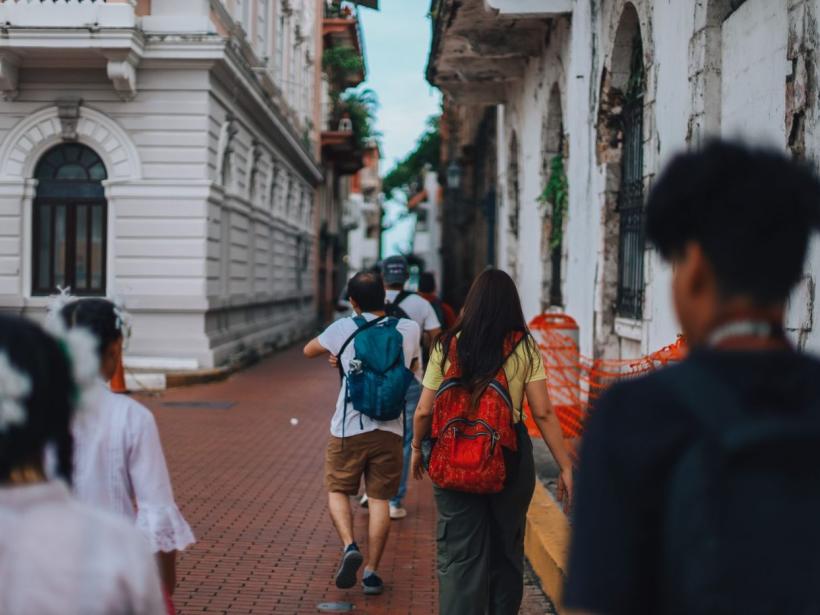
Panama City’s central tourist districts are generally safe to explore on foot during the day, but you need to choose your route carefully and avoid certain neighbourhoods after dark. Casco Viejo, the restored old quarter, has a visible police presence and is busy with visitors until late evening. Stick to the main streets and plazas there, and take a taxi or ride-share for any journey longer than a few blocks after 22:00.
Punta Pacifica and the area around the Multiplaza mall feel calm and are patrolled by private security, though they are designed more for cars than for pedestrians. The Amador Causeway and the Miraflores Locks visitor centre at the Panama Canal are also low-risk spots where walking is pleasant and straightforward. El Chorrillo, just west of Casco Viejo, has a reputation for gang-related activity and is not a place for casual sightseeing on foot. The same applies to Curundú and parts of San Miguelito.
A practical rule for Panama City is to walk with purpose, keep your phone out of sight, and avoid empty streets or parks once the shops close. If you are unsure about a street, a short Uber ride costs little and removes the guesswork. The US State Department advice, last updated in January 2025, notes that crime is more frequent in areas of the city that tourists rarely visit. Staying in well-lit, busy zones removes most of the risk.
How common is street crime and what precautions help
Street crime, particularly pickpocketing and bag snatching, is the most frequent safety issue you are likely to encounter in Panama. The US State Department travel advisory, updated in December 2023, notes that theft is common in urban areas and on public transport. Armed robberies do occur, though they are less frequent. The risk is higher in crowded places such as bus terminals, markets and busy tourist spots where distraction is easier.
Most incidents are opportunistic rather than violent. Pickpockets often work in pairs, one creating a diversion while the other takes a phone or wallet from an unzipped bag or back pocket. Bag snatching from a chair at a street cafe or from the passenger seat of a car stopped at a traffic light is also reported. Armed robbery is rare but more likely at night in poorly lit streets or on isolated beaches. The practical advice from all official sources is consistent: avoid drawing attention to valuables and stay alert to your surroundings.
Take extra care at ATMs. Use machines inside banks, shopping centres or hotels during daylight hours, never a standalone street ATM after dark. Shield your PIN and put cash away quickly before you leave the machine. If a machine swallows your card or malfunctions, go into the bank rather than accepting help from a stranger.
Simple habits lower your risk significantly:
- Carry only the cash you need for the day and leave spare cards and your passport in a hotel safe.
- Use a cross-body bag with a sturdy strap and keep it in front of you, not hanging loose behind your back.
- Keep your phone out of sight when you are not using it and never place it on a table at a street cafe.
- Avoid wearing expensive jewellery or watches that make you an obvious target for snatch-and-run theft.
- If someone tries to grab your bag, let it go: no possession is worth a confrontation that could escalate.
- Walk with purpose, even if you are unsure of the route, and step into a shop or hotel to check directions discreetly.
Are there risks from protests or road closures
Protests in Panama tend to follow a predictable pattern. They flare up around specific political or economic grievances, most often concerning fuel prices, mining contracts or education funding. The last major wave of road closures happened in late 2023. While the situation has been calm since, another round is always possible during periods of national tension.
The Pan-American Highway is the route most vulnerable to disruption. Blockades typically appear near provincial borders, particularly around Santiago in Veraguas province and near the Chiriquí province line. When protests block this road, travel between Panama City and the western highlands or the Costa Rican border becomes impossible by land. Domestic flights to David usually keep running, though seats sell out fast.
Check the current situation by monitoring the Twitter account of the Panamanian transit authority (Autoridad del Tránsito y Transporte Terrestre) and local news outlets like TVN Noticias. Your accommodation host is often the most reliable source. They will know within hours if a roadblock has gone up anywhere along your planned route, and they can tell you whether it is a minor delay or a reason to cancel the drive.
Is public transport and driving safe in Panama
The Panama City metro is the safest and most predictable way to get around the capital. Trains run on time, stations are clean and well lit, and security staff are present at every stop. Buses in the city, especially the modern Metrobus fleet, are a decent second choice during the day. The UK FCDO warns against taking long distance buses at night, particularly on routes near the Darién Gap and in parts of Colón province, where hold-ups have happened.
Taxis carry more risk. Official yellow cabs in Panama City are metered but not always in good repair, and drivers sometimes overcharge tourists who do not know the going rate. The Australian Smartraveller advisory recommends you use a rideshare app such as Uber or Cabify instead, because the journey is tracked and the fare is fixed before you get in. Avoid hailing a taxi on the street after dark. If you do use one, have your hotel or restaurant call a radio taxi for you and agree the price before you leave.
Driving yourself comes with a different set of challenges. The US State Department notes that traffic accidents are a leading cause of injury for visitors. Road rules are poorly observed outside the capital, and you will share the highway with overloaded trucks and unlit bicycles at dusk. Stick to the Pan-American Highway during daylight hours, keep your doors locked in slow traffic, and never leave valuables visible on the seat. If you plan to explore rural areas, a rental car with good ground clearance is worth the extra cost, but only if you are a confident driver who reads Spanish road signs without hesitation.
How to stay informed about safety while you are in Panama
You can monitor the situation with a handful of free, official sources and a few sensible offline habits. Start with your own government’s travel advisory. The UK FCDO, the US State Department and Australia’s Smartraveller all update their Panama pages when protests, roadblocks or security incidents occur, and you can sign up for email alerts before you leave home.
Once you are in the country, local information becomes more useful than a general advisory. Hotel front desk staff and your host, if you rent an apartment, know which neighbourhoods are calm and which routes are blocked today. They will tell you plainly whether it is fine to walk to a certain restaurant or better to take a taxi.
Practical tools to keep on your phone:
- Register with your embassy’s traveller programme (STEP for US citizens, for example) so you receive local security notifications by text or email.
- Follow the official Twitter or X account of your embassy in Panama City; they post real-time alerts about demonstrations and road closures.
- Use Waze or Google Maps with live traffic turned on; sudden roadblocks show up quickly because local drivers report them.
- Check the English-language daily Newsroom Panama for straightforward reporting on protests, strikes and weather disruptions without sensationalism.
- Join a local expat or neighbourhood WhatsApp group if your host invites you; these are often the fastest source of on-the-ground updates.
Frequently asked questions
Is Panama safe for solo female travellers
Yes, with the same precautions you would take in any Latin American city. Stick to well-lit streets at night, avoid isolated beaches alone and dress to blend in rather than stand out. Many solo women travel Panama without incident by staying in reputable accommodation and using ride-hailing apps instead of street taxis.
Is the tap water safe to drink in Panama
In Panama City and most urban areas the tap water is treated and generally safe to drink. Outside the capital, especially in Bocas del Toro and rural parts, stick to bottled or filtered water to avoid stomach upsets. Hotels and restaurants in tourist zones almost always use purified water.
Do I need any special vaccines for Panama
Routine vaccines should be up to date. The UK FCDO and US CDC recommend hepatitis A and typhoid for most travellers. Yellow fever vaccination is required only if you are arriving from a country with yellow fever risk. Malaria prophylaxis is advised for the Darién region and parts of Guna Yala, not for Panama City or the canal area.
Is it safe to use ATMs and credit cards in Panama
Yes, but stick to ATMs inside banks or shopping centres rather than standalone street machines. Skimming does happen, so cover the keypad and check the machine for loose parts. Notify your bank before travelling and keep a backup card separate from your main wallet.
Photo: Alejandra Montenegro, Pexels (Pexels License)