
What do official travel advisories say about Italy in 2025
Italy sits at Level 2 on the US State Department’s four-point scale, a standing advisory urging increased caution because of terrorism. The UK Foreign, Commonwealth and Development Office gives similar advice, flagging a high threat of terrorist attacks across the country, while Australia’s Smartraveller matches the Level 2 rating and points to the risk of protests turning violent in major city centers. These assessments, current as of early 2025, have held steady for several years without sudden escalations.
The guidance does not warn you to stay away. All three agencies describe a destination where millions of visitors move safely every year, but they urge travelers to stay alert in crowded public spaces, near government buildings and at large gatherings. In practice: Italy remains open and busy with tourists. Official advice focuses on vigilance, not on changing your itinerary.
Are there any regions of Italy travelers should avoid

Italy is very safe for visitors. The areas flagged by official advisories are tiny pockets that most tourists will never come near. The US State Department notes Italy's history of sporadic domestic terrorism, though incidents are rare and security forces respond quickly. The UK FCDO does not advise against travel to any part of mainland Italy.
One specific warning concerns the area around the Dal Molin military base in Vicenza, where small anti-military protests occasionally occur. There is no reason for a traveler to be in that immediate vicinity. The tiny exclave of Campione d'Italia, an Italian municipality entirely surrounded by Switzerland on Lake Lugano, operates under its own quiet rhythm and presents no safety concern whatsoever.
For the standard tourist itinerary, from Sicily to the Dolomites, no region requires avoidance. The advice is the same as for any major European country: stay aware of your surroundings in crowded places and follow local news during your stay.
What about pickpocketing and petty crime in tourist cities
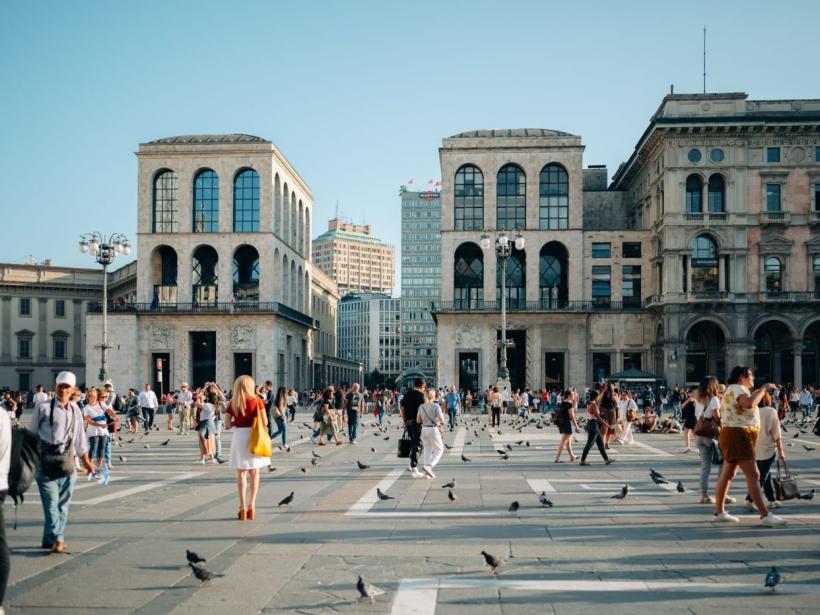
Pickpocketing is the most common safety issue travelers report in Rome, Florence, Venice and Milan. Thieves work crowded spaces: train stations, packed metro cars, bus stops and queues outside major attractions like the Colosseum or the Uffizi. The risk is highest in Termini station in Rome, on the vaporetto lines in Venice and around the Duomo in Milan, where distraction techniques are frequent.
Most incidents take under five seconds and involve a bump, a dropped map or a sudden offer of help. A bag left on a chair or a phone on an outdoor table disappears faster than you expect. Violent confrontations are rare; the real danger is losing your passport, cards and cash in one moment and spending the next two days at the consulate and the bank.
Protect yourself with a few simple habits:
- Keep your passport and at least one bank card in a zipped inside pocket or a money belt under your clothes, never in a backpack.
- Wear your day bag across your body and switch it to the front in crowded metro cars or on busy buses.
- Carry only the cash you need for that day and split it between two pockets so one loss does not leave you stranded.
- Do not hang your phone or bag on the back of a chair at cafes and restaurants; keep everything in your lap or between your feet.
- Avoid the empty metro carriage on a packed train: thieves board it deliberately to target the people who follow.
- If a stranger initiates physical contact or an overly friendly conversation in a queue, step back and check your pockets immediately.
Is public transport safe, especially at night

Italy’s public transport network is generally safe and reliable, and millions of people use it daily without incident. Trains, metros, and buses in major cities run on predictable schedules, and stations are well lit and monitored by CCTV. The main concern after dark is petty theft, not violent crime.
Recent visitors to Rome and Milan say the metro feels busy and secure until the last train, though some suburban stations can feel deserted late at night. Roma Termini and Milano Centrale are active around the clock, but the areas just outside attract loitering after midnight. Move through them without lingering. On regional trains, keep your bag on your lap or loop a strap around your leg rather than placing it on the overhead rack, particularly on routes popular with tourists such as the Cinque Terre line.
- Validate your ticket before boarding to avoid a fine, and keep it handy during the journey.
- On night buses, sit near the driver or in a carriage with other passengers rather than an empty section.
- Wear your daypack on your front in crowded metro carriages and when boarding.
- Avoid empty train carriages late at night; a carriage with a few commuters is a safer choice.
- Have your hotel address and a charged phone ready before you leave the station, so you are not distracted on the street.
How do natural events like floods or heatwaves affect travel plans

Italy's geography creates distinct seasonal challenges that influence your itinerary. High summer brings intense heat, particularly in inland cities like Florence and Rome, where daytime temperatures regularly exceed 35°C (95°F) in July and August. Coastal areas and the northern lakes offer more comfortable conditions during these months.
Autumn rains affect different regions on different schedules. Liguria and Tuscany can experience heavy downpours in October and November, sometimes causing localised flooding that disrupts train services on secondary lines. Venice sees acqua alta (high water) most often between October and January, though the MOSE flood barrier system now protects the city from all but the most exceptional tides.
Local authorities follow set plans for these events. During heatwaves, the Ministry of Health activates a national warning system and many cities extend public fountain access and open cooling centres. When flooding disrupts transport, Trenitalia publishes real-time updates and alternative routing through its app. Packing a reusable water bottle, checking weather forecasts through the Italian Civil Protection website, and building an extra morning into your schedule during the rainy season are practical steps that keep your plans flexible.
What do Ukrainian travelers who recently returned say about safety
Travelers returning from Italy over the past few months consistently describe a relaxed and welcoming atmosphere. The most frequent observation is that standard precautions felt sufficient, and no one reported feeling unsafe walking through city centers or using main train stations during the day.
Several visitors noted they were surprised by how visible local police and carabinieri are in tourist-heavy areas. A recurring piece of advice from recent returnees is to keep a photocopy of your Ukrainian passport and your digital residency documents separate from your phone. Losing a phone with all your scans on it was the one practical headache mentioned more than once.
- Keep a paper copy of your passport data page in your hotel room or luggage.
- Save scans of your documents in a cloud folder accessible from a friend's phone.
- Carry only the cash you need for the day, splitting it between two pockets.
- Write down the address of your accommodation on paper in case your phone battery dies.
- Trust your instincts around overly helpful strangers in crowded transit hubs.
Frequently asked questions
Is Italy safe for solo female travelers
Yes. Solo female travelers routinely report feeling comfortable in Italian cities and towns. Unwanted attention is most common near busy train stations and tourist landmarks. A firm 'no grazie' and walking toward a group or into a shop usually ends the situation quickly.
Do I need special insurance for Italy
Standard travel insurance that covers medical expenses, trip cancellation, and lost belongings is enough. If you plan to drive, check that your policy includes roadside assistance. No additional safety-specific coverage is required for Italy.
Are there any health risks I should prepare for
No vaccinations are required for Italy. The main health concern in summer is heat exhaustion, especially in cities like Rome and Florence. Carry a refillable water bottle, use the public drinking fountains, and plan indoor activities during the hottest part of the day.
Has tourism been affected by recent events in Europe
Italy's tourism infrastructure continues to operate normally. Airports, trains, museums, and hotels are open and running on regular schedules. Booking accommodations and popular attractions in advance remains the best way to avoid disappointment during peak seasons.
Photo: Matteo Angeloni, Pexels (Pexels License)