
What do the latest aviation safety statistics show?
Flying is the safest form of long-distance travel by a wide margin. The 2024 IATA Annual Safety Report recorded a global fatal accident rate of 0.03 per million flights, meaning you would have to fly every day for over 100,000 years to experience a fatal accident. This rate improved from the five-year average of 0.06, continuing a long trend of declining risk.
ICAO data confirms the same pattern. Scheduled commercial operations saw fewer than 10 fatal accidents worldwide in 2024, carrying over 4.5 billion passengers. Turboprop operations on regional routes carry a slightly higher risk than jet operations, though both remain far safer than ground transportation. Most incidents involve non-scheduled cargo or private general aviation, not the scheduled passenger flights most travelers book.
Why is commercial air travel so safe compared to driving?

Commercial aviation relies on layered redundancy that simply does not exist on the road. A modern airliner has at least two engines, two independent electrical systems, three autopilots on long-haul jets, and multiple hydraulic circuits. If one element fails, another takes over without the aircraft becoming unflyable. On a highway, a single tire blowout or a moment of distraction can lead to a fatal crash with no backup system to intervene.
Air traffic control adds a second layer that removes the unpredictability of sharing space with other vehicles. Every commercial flight moves inside a protected block of airspace that no other aircraft can enter. Controllers on the ground sequence arrivals and departures with precise timing, while onboard collision avoidance systems provide a final independent warning if separation is ever lost.
Pilot training and medical standards further separate the cockpit from the driver's seat. The specific factors that make flying statistically safer include:
- Airline pilots undergo recurrent simulator checks every six months, practicing engine failures, wind shear, and other emergencies that drivers never drill.
- Every commercial flight operates under a legally mandated flight plan filed with air traffic control before the engines start.
- Aircraft are maintained on strict calendar and flight-hour schedules, with components replaced long before they show wear.
- Cockpit crews always work as a pair or a trio, with one pilot monitoring while the other flies, a cross-check that eliminates single-person errors.
- Strict medical certification rules catch conditions like heart arrhythmias or sleep apnea that could incapacitate a driver without warning.
Which regions and airlines have the strongest safety oversight?
Three major bodies set the global standard for aviation safety oversight. The Federal Aviation Administration (FAA) regulates US carriers and issues the International Aviation Safety Assessment (IASA) program, which rates every country whose airlines fly to the United States. A Category 1 rating means the country meets ICAO standards, while Category 2 signals serious deficiencies in its regulatory framework.
The European Union Aviation Safety Agency (EASA) enforces similarly rigorous standards across all member states. The EU Air Safety List, updated regularly, bans or restricts airlines that do not meet those requirements from operating in European airspace. Before booking with an unfamiliar carrier, a traveler can check that list on the European Commission's transport website. A ban there is an immediate and unambiguous red flag.
At the international level, ICAO audits national oversight systems through its Universal Safety Oversight Audit Programme. The results are public and measure how well a country implements critical safety protocols. For individual airlines, the IATA Operational Safety Audit (IOSA) is the practical gold standard. An IOSA-registered carrier has passed a detailed inspection of its operations, maintenance, and safety management. You can verify a current IOSA certificate directly in the IATA registry online, a quick step that cuts through marketing claims and confirms a real commitment to safety.
How do current geopolitical tensions affect flight routes?

Airlines and aviation authorities treat conflict zones with extreme caution. When a region becomes unstable, the airspace above it is often closed entirely to commercial traffic. This is not a suggestion. It is a binding prohibition enforced by national regulators and backed by real-time intelligence from agencies like the European Union Aviation Safety Agency (EASA) and the US Federal Aviation Administration.
EASA issues Conflict Zone Information Bulletins that flag specific airspace as high risk. These bulletins are not press releases for the public. They are detailed operational documents that airlines use to justify rerouting decisions to their insurers and national oversight bodies. A formal Notice to Air Missions, known as a NOTAM, then codifies the closure. Pilots and dispatchers must file flight plans that stay clear of the restricted coordinates, often adding thirty to ninety minutes to a journey as they skirt the edges of a closed zone.
Rerouting happens well before any official bulletin. Most major carriers maintain in-house security departments that monitor geopolitical developments and will voluntarily avoid overflying a tense region even if the airspace is technically still open. That is why an Amsterdam to Bangkok flight might suddenly track over the Caucasus instead of its usual corridor. Airlines willingly absorb the extra fuel cost because no commercial operator wants to be the test case for whether a threat was credible.
What practical steps can nervous flyers take before and during a flight?

Anxiety before a flight often comes from a feeling of losing control. Putting a few small decisions back in your hands makes a real difference. Start by choosing a seat over the wing, where the aircraft structure is stiffest and you feel the least vertical movement during turbulence. Download a turbulence forecast app like Turbli a few hours before departure, not to obsess over every bump, but to see that the predicted light chop is routine and brief.
Clinical psychologists who specialise in flight anxiety recommend grounding techniques that work at 35,000 feet as well as they do on the ground. The 4-7-8 breathing method slows a racing heart within two minutes: inhale quietly through your nose for four seconds, hold for seven, and exhale completely through your mouth for eight. Pair that with a simple sensory exercise, such as pressing your feet firmly into the floor and naming five things you can see in the cabin, to pull your mind back to the present moment.
- Pick a seat over the wing to reduce the sensation of turbulence.
- Check a turbulence forecast app to see that the expected bumps are minor.
- Tell a flight attendant you are a nervous flyer when you board, so the crew can check on you.
- Use the 4-7-8 breathing technique during takeoff or whenever anxiety spikes.
- Press your feet into the floor and name objects around you to interrupt anxious thoughts.
- Load your phone with a playlist or podcast that is too engaging to let your mind wander.
Where can you check official travel and airspace advisories before booking?
The US State Department issues travel advisories for every country, updated in real time as conditions change. You can look up a destination at travel.state.gov and see a clear Level 1 to 4 rating, with Level 4 meaning "Do Not Travel." The page for each country lists specific risks such as armed conflict, civil unrest, or hazards near airports.
The UK Foreign, Commonwealth and Development Office publishes comparable advice on its website. Its maps show no-go zones and areas where the FCDO advises against all but essential travel. The FAA runs a separate International Aviation Safety Assessment program that rates a country's civil aviation authority as Category 1, meaning it meets ICAO standards, or Category 2, meaning it does not. A Category 2 rating does not ban flights, but it signals weaker oversight. You can check it on the FAA website before you book with a foreign carrier.
- Visit travel.state.gov for the current US advisory level and a plain-language risk summary for your destination.
- Check gov.uk/foreign-travel-advice for FCDO maps that highlight restricted airspace and regions to avoid.
- Look up a country's IASA rating on the FAA website to see whether its aviation regulator meets international safety standards.
- Review your airline's safety history and any recent operational changes through its official press releases or investor updates.
- Book flights that avoid known conflict zones and respect published airspace closures, even if a cheaper routing crosses them.
Frequently asked questions
Is turbulence dangerous for a modern airliner?
Turbulence is uncomfortable but not a structural threat to commercial jets. Aircraft are built to withstand forces far beyond what even severe turbulence produces, and pilots routinely adjust altitude to find smoother air.
Has the number of plane crashes increased recently?
No. According to IATA's 2024 annual safety report, the industry recorded one fatal accident for every 1.26 million flights. The long-term trend shows a steady decline in both accidents and fatalities over the past two decades.
Should I avoid flying because of the news about aviation incidents?
High-profile incidents receive intense media coverage, which can distort the perception of risk. The data from aviation regulators consistently shows that boarding a scheduled commercial flight remains far safer than most everyday activities, including driving to the airport.
What is the safest seat on a plane?
No single seat guarantees greater safety in the extremely rare event of an accident. However, studies by the FAA and independent researchers suggest that seats in the rear third of the cabin statistically show slightly higher survival rates, largely due to their proximity to rear exits.
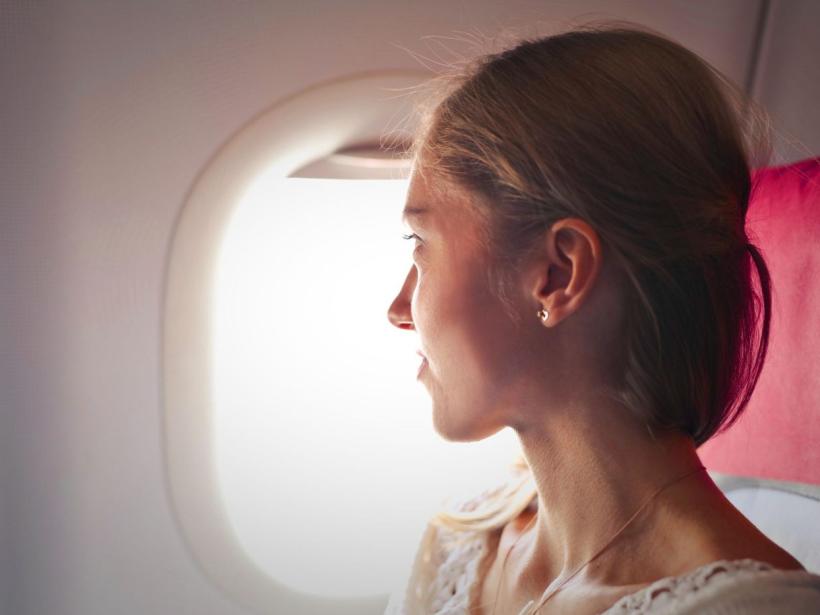
Photo: Adrienn, Pexels (Pexels License)