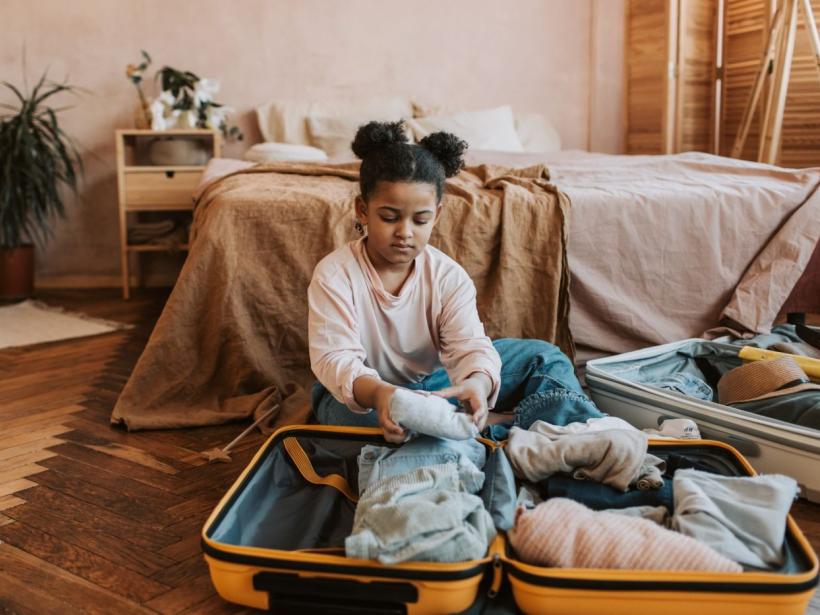
What should go on your packing checklist?
A workable checklist covers documents, clothing, toiletries, electronics and medication, and nothing for a trip you did not book. Pack for the forecast at your destination, not for every weather that might appear. A week in Lisbon in April needs a light rain shell, not a winter coat.
- Documents: passport, visas, bookings, insurance policy and a printed copy of each.
- Clothing: one outfit per day plus a spare, layers for the expected temperatures, and shoes you have already worn in.
- Toiletries: decanted bottles under 100 ml, a toothbrush and any prescription items in their original packaging.
- Electronics: phone, charger, a plug adapter for the country you are visiting and a power bank for long travel days.
- Health: prescriptions, a small first-aid kit and copies of any medical notes.
Lay everything out the day before you leave and put back the third pair of shoes and the “just in case” jumper. If you cannot name the day you will wear an item, it stays home.
How do you pack a suitcase compactly?

Roll soft items like T-shirts, underwear and knitwear, and fold structured pieces such as jackets and shirts. Rolling squeezes out air and lets you see everything at a glance; folding keeps collars and shoulders in shape. For crease-prone clothes, try the bundle method: lay the longest items flat across the open case, stack the rest on top, then wrap the ends over the pile.
Packing cubes keep categories separate and stop the contents from shifting in transit. Fill the gaps that cubes leave with socks, belts and chargers, and stuff shoes with small items before placing them heel to toe along the base. Heavy things go closest to the wheels, where they are easiest to carry.
- Roll soft clothes and fold structured ones.
- Bundle crease-prone pieces around the case edges.
- Pack shoes heel to toe and fill them with small items.
- Place heavy items near the wheels.
- Tuck socks and chargers into the gaps between cubes.
What cannot go in your carry-on bag?
Security screeners refuse liquids in containers over 100 ml, and the limit applies to the container, not to how much is left inside it. A half-empty 200 ml bottle of shampoo still counts as 200 ml. All containers must fit in one clear resealable bag, usually about 20 x 20 cm, and each passenger gets one bag.
Security staff also routinely refuse sharp and blunt objects in the cabin. Pack these in checked luggage:
- Knives of any blade length, including pocket knives and multi-tools with a blade.
- Scissors with blades longer than about 6 cm, plus razors with exposed blades.
- Screwdrivers, wrenches, pliers and drill bits.
- Sharp or pointed items such as hiking poles, tent pegs and corkscrews with a foil cutter.
- Sporting goods like baseball bats, golf clubs and climbing hardware.
Rules vary by country and by airline, and some airports add their own restrictions on powders, batteries or duty-free alcohol. Check the security page for every airport on your route and your airline's baggage rules before you leave.
How much clothing do you actually need?

Pack three to four days of clothes, then do laundry and repeat the cycle on longer trips. For a week, that means three tops, two bottoms, one dressier outfit and a week's worth of underwear and socks. A two-week trip with a washing machine once mid-trip needs barely more than the same pile.
Cut the pile by a third with one test. Lay everything out, then pull one item from every category and put it back in the wardrobe. Choose fabrics that dry overnight, such as merino or technical blends, so hand washing in a sink keeps the rotation going.
- Build every outfit from two bottoms and neutral colours so each top works twice.
- Pack one dressier outfit for dinners, flights or a last-minute meeting.
- Wear the bulkiest shoes and jacket on travel days to save space.
- Bring three pairs of socks and underwear per four days if you can wash.
- Skip the "just in case" items you have never worn at home.
How do you pack toiletries without leaks?

Decant liquids into travel bottles of 100 ml or less and fill them to about three quarters, so the bottle has room to expand in the cabin. Screw the cap on, then add a strip of cling film or tape over the neck before closing the outer lid. A zip-top clear bag holds the whole set, and a second bag around anything oily protects the rest of the suitcase.
Solid formats remove the risk. Shampoo bars, solid deodorant, toothpaste tablets and bar soap travel without pressure changes and rarely count against a liquids allowance. Keep the liquids bag at the top of your carry-on: at security you lift it out as one unit, and the rules on containers of 100 ml or less in a single clear bag apply at most airports.
- Fill travel bottles to three quarters, never to the brim.
- Wrap the neck with cling film before the outer cap goes on.
- Pack the clear liquids bag at the top of your carry-on.
- Swap shampoo and shower gel for solid bars where you can.
- Double-bag anything oily, including sunscreen and hair oil.
What should stay in your day bag?
Your day bag holds what you cannot replace quickly: documents, medication and one change of clothes. Keep it under the seat in front of you, not in the overhead bin, so you can reach it without waiting for the aisle to clear. If checked luggage goes missing, this bag covers the first 24-48 hours.
- Passport, boarding pass, travel insurance and a printed copy of your booking stay in an inner zip pocket.
- Prescription medication travels in its original labelled packaging, with a few days extra in case of delay.
- One full change of clothes, rolled tight, covers a lost suitcase on a short trip.
- A power bank and charging cable keep your phone alive for onward transport and hotel contacts.
- A refillable water bottle and a light layer handle the cold cabin and the wait at arrivals.
Check the airline's size and weight limit for a personal item before you fly, since some carriers measure the bag at the gate.
Frequently asked questions
Is it better to roll or fold clothes?
Rolling works best for casual knits, t-shirts and anything that does not crease badly, and it saves space in a soft bag. Fold or bundle structured items such as shirts and jackets. Many travellers use both: rolled clothes in the gaps, folded shirts flat on top.
Can I take a power bank in my carry-on?
Yes, spare lithium batteries and power banks must travel in the cabin, not in checked baggage. Airlines set their own limits on capacity, so check your carrier's rules before you fly. Keep the power bank within reach in case security asks to see it.
How early should I finish packing?
Finish the night before so you are not rushed on the morning of departure. Lay out documents, medication and chargers separately, then pack the suitcase once. A bag packed in a hurry is the one most likely to go over the weight limit at check-in.
What if my suitcase is over the airline's weight limit?
Move heavy items such as shoes, books and toiletries into your carry-on, which usually has its own allowance. Wear your bulkiest layer on the plane. Check the exact limits for your fare class, since they vary by airline and route.
Photo: Vlada Karpovich, Pexels (Pexels License)